Meet the Founder
Product management grounded in systems engineering and field reality.
Hyperion helps leaders decide what should be built, what must be proven and what should stop before a product ships or a capability goes into use in an operation. Software-defined product, platform and release work is in scope with or without AI.

The Mission
A promising system becomes a dependable product, or a capability in accepted use, only when customer or user evidence, system behaviour, field operations, safety and economics are resolved together. Hyperion makes those trade-offs explicit before the next irreversible commitment.
Product SystemPrinciples
Ship or Stop
Every engagement has a written decision point. A Review ends in a recommendation to go, redirect, sequence or stop, with 90-day commitments. A Mission runs to an evidence gate with milestone checkpoints. A leadership mandate has a written checkpoint to renew, revise, hand over or stop. The decision stays yours.
Boundary Before Brand
Deployment region, data boundary, licensing, evaluation, latency, lifecycle cost and exit path are written down before a provider is chosen. Where AI is involved, Mistral and open-weight models are options, not defaults. No resale kickbacks or referral fees: the recommendation follows the evidence for your system.
Honest Over Comfortable
I tell you what you need to hear. Sometimes that's 'don't do this.' Sometimes it's 'you're not ready.' Respectful pushback is part of what you're paying for. If you want a yes-person, I'm not it.
Independence as the Goal
I build myself out of a job. Every engagement ends with written documentation and a named owner on your side. Missions and leadership mandates include a planned handover. When I leave, your team runs it.
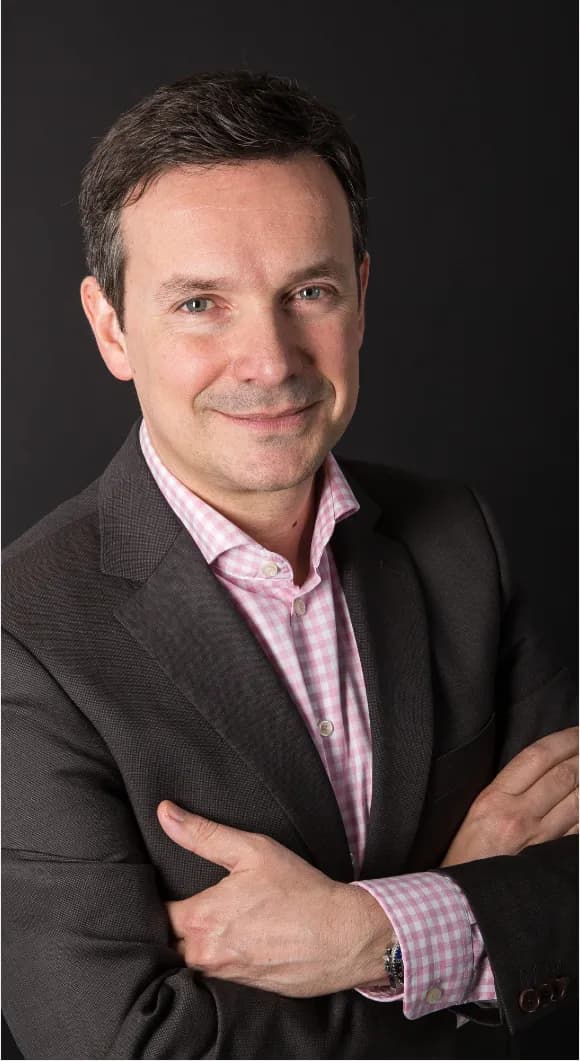
Mohammed Cherifi
Current evidence — classified
Each record appears only when its exact wording, publication surface, permission and review date are currently authorized.
17+ years
NDS/Cisco video platforms deployed at 100M+ scale
Deputy General Manager, Connected Car Services at the Renault-Nissan-Mitsubishi Alliance — product leadership on connected-services programs (Renault OpenR Link, NissanConnect), technology now deployed in 7M+ connected vehicles
product marketing at ABB E-mobility on EV-charging hardware and charging software
in-house AI ventures, including Auralink
Forbes Technology Council Member Leader — leads the Tech Consulting Group; Council member since October 2021, with 7 bylined posts + 4 expert-panel contributions
MIT Professional Education — eight professional course certificates (2016–2017), including Data Science, Systems Engineering, Cybersecurity, and IoT
French Government AI Ambassador for Industry — Osez l'IA Initiative
Berkeley SkyDeck Key Advisor (pro-bono, since October 2022)
FranceNum Activateur
Board Member, La French Tech Athens
Worked on embedded Linux, Android and open-source integration for production connected-device platforms during his NDS/Cisco career.
Selected public events and programme appointments.
In the Field
These photographs document public events and programme participation. They do not imply endorsement, sponsorship or client relationships.


Partner in Greece
Strategy-to-execution partner in Greece
Stavros Stavrides
For engagements in Greece, I work with Stavros as an independent partner. As the founder of MetaBusiness, he brings 20+ years of experience in complex organisations and helps leaders close the gap between strategy and execution. His work spans leadership alignment, decision clarity, team dynamics, behaviour and culture activation, and sustained change, combining structured frameworks with startup-inspired methods. This complements Hyperion's product and architecture work with the operating habits needed to turn decisions into results.
This partnership applies to Greece only. Stavros is an independent partner, not a Hyperion employee; Hyperion remains founder-led.