Which mission outcome justifies autonomy?
Gate: Mission value and responsible operator are explicit.
An adjacent sector for disconnected autonomy, remote authority and mission economics
Adjacent sectorA remote or autonomous system must create useful mission value despite intermittent communications, expensive intervention and environmental uncertainty.
Discuss this product decision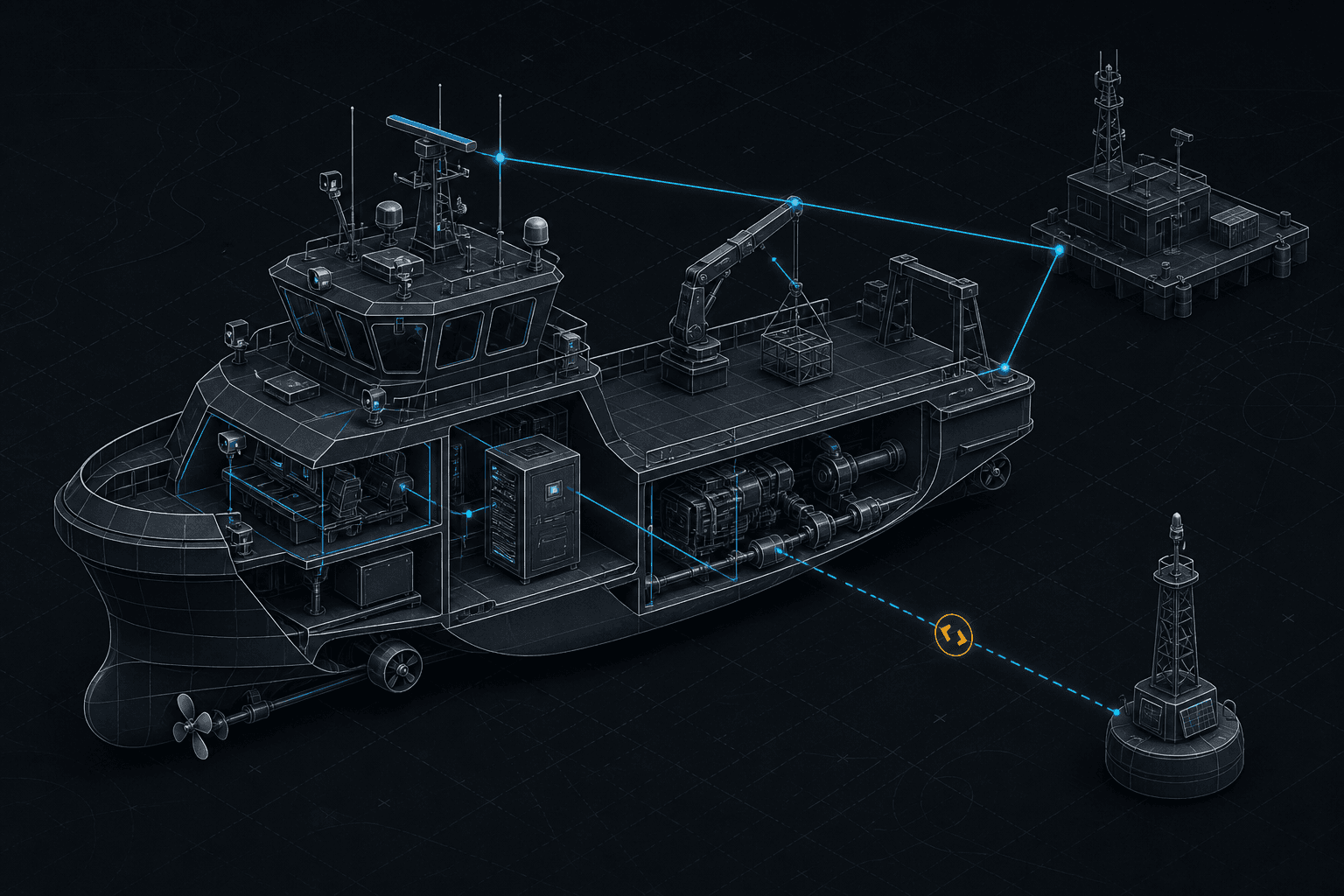
Gate: Mission value and responsible operator are explicit.
Gate: The operating envelope is testable.
Gate: The autonomy and communications boundaries are explicit.
Gate: A reviewed degraded state and recovery route exist.
Gate: Human and service workflows are designed.
Gate: Weather, energy, utilisation and recovery are included.
Owned distributed and offline-system work offers architecture hypotheses, not marine validation.
Promotion requires named domain review, relevant operating work, evidence and legal or safety review.
What Hyperion is not claiming
This page does not claim maritime delivery, vessel classification, marine assurance competence or authority over safety-critical operations.
Appropriate mandate
A fit conversation may explore a bounded product decision, with marine-domain specialists identified before any assurance claim.
Discuss this product decision