Ga naar inhoud
Alle sectoren

Betrouwbaarheid van de hele vloot, veldoperaties en economie — niet alleen modelprestaties

Primaire markt

Energie, EV-laden & infrastructuur

A charger, optimisation model or diagnostic capability works technically, but fleet economics, technician workflow, interoperability and software–hardware ownership remain fragmented.

Het beoordeelde beslisdossier is momenteel in het Engels beschikbaar. Deze vertaalde titel ondersteunt navigatie; de pagina blijft buiten lokale zoekindiening tot een moedertaalreview.

Bespreek deze productbeslissing

Scopingvoorbeelden

Elk voorbeeld laat zien hoe een opdracht kan worden afgebakend. Geen ervan beschrijft klantwerk, en geen ervan bevat een resultaat of een prijs.

  • AI: a candidate, compared first with existing tools and a process fix

    Charging incident triage and field recovery

    Compared first with existing charging-management tools, a better fault taxonomy and service-process repair. If one of those is enough, that is the result that is delivered.

    Wie het vraagt
    Operations or service leader at a charge point operator
    Situatie
    For one equipment cohort, fault evidence, remote triage and technician escalation create repeat work and slow recovery.
    Wat er wordt afgenomen
    One incident workflow in accepted use for that cohort: evaluated diagnosis support, permitted escalation, prepared users and a named operating owner, judged on correctly triaged incidents and time to accepted resolution.
    Grens
    Suggestion only. A suggestion never authorises a remote command: any remote action needs written permissions, acceptance by the operator's qualified authority, independent constraints, logging and a recovery path, and is scoped separately. No uptime or avoided-visit figure is promised.
  • AI: optional

    Charger or energy-platform product development

    Optional. Bounded diagnostics or orchestration only where they beat the existing approach.

    Wie het vraagt
    Product leader at a charging-equipment maker or charging-software company
    Situatie
    Hardware, firmware, back-end and service work do not yet add up to one customer product with a release approach, and mixed asset versions make a nominally compatible feature unreliable in the field.
    Wat er wordt afgenomen
    One product-development and commercial milestone: the reusable software core and the validated hardware configurations it runs on, interoperability and field-release evidence for the agreed variants, and named support responsibilities.
    Grens
    Electrical protection, local control and grid limits are not replaced by software. No protocol compatibility or certification is claimed from application tests. Engineering responsibility is named in scope.
01

De fysieke systeemgrens

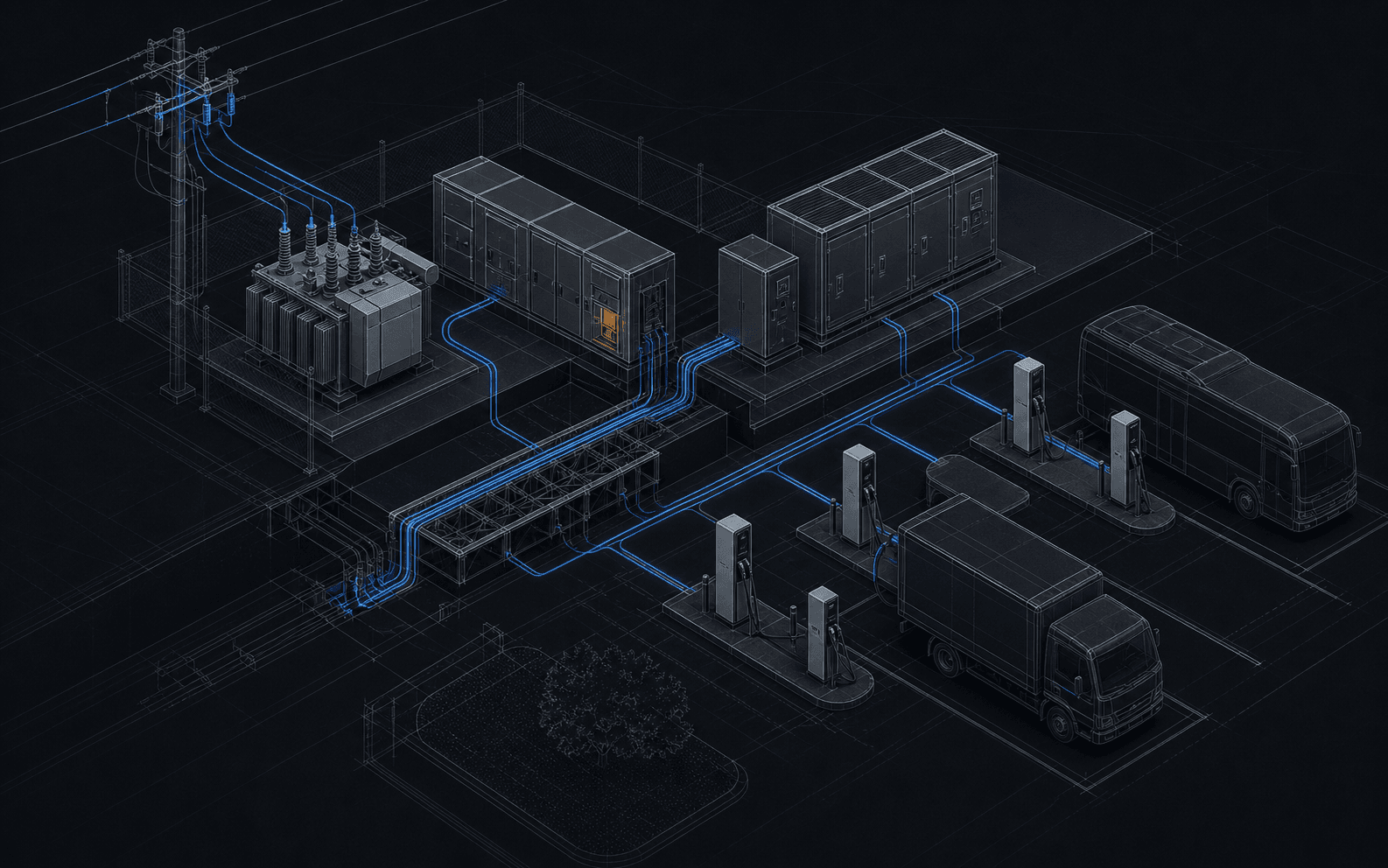
Fysieke systeemgrens voor Energie, EV-laden & infrastructuurOptimising a model is secondary to optimising the deployed product fleet: asset availability, field recovery, energy constraints, interoperability and whole-life service cost must move together.PHYSICAL + RUNTIME SYSTEMProductgrensHUMAN + OPERATING SYSTEM01

Asset

02

Edge

03

Connect

04

Platform

05

Energy

06

Operator

07

Field

08

Fleet

  1. 01AssetCharger, meter, storage and local generation
  2. 02EdgeFirmware, diagnostics and local control
  3. 03ConnectProtocols, identity and offline behaviour
  4. 04PlatformCharging management and orchestration
  5. 05EnergyGrid, tariffs, flexibility and constraints
  6. 06OperatorNetwork operations and human authority
  7. 07FieldTechnician, spares and recovery
  8. 08FleetAvailability, revenue and lifecycle cost
Optimising a model is secondary to optimising the deployed product fleet: asset availability, field recovery, energy constraints, interoperability and whole-life service cost must move together.
02

Waar producteigenaarschap breekt

  1. Hardware, firmware, backend and energy optimisation each have roadmaps but no common fleet outcome.
  2. Remote autonomy is defined by what software can do, not by what operators are prepared to let it do.
  3. Protocol conformance is mistaken for reliable behaviour under disconnects, partial failures and mixed asset generations.
  4. The diagnostic model is evaluated on detection while the business pays for truck rolls, downtime and repeat visits.
  5. Field evidence does not flow cleanly back into product, firmware and operating-policy decisions.
  6. Reusable charger software and validated hardware configurations are not separated, so every hardware generation becomes another software variant to release and support.
03

Zes productbeslissingen

Klant- & operatorwaarde

Which driver, fleet, operator or energy outcome is being improved?

Poort: The intended user, service promise and operational owner are named.

Bewijs

Which asset and failure distribution represents the deployed fleet?

Poort: Evidence spans generations, sites, connectivity states and real recovery workflows.

Systeem & technologie

What must happen on the asset, platform, energy interface or with a human?

Poort: Authority, timing, data and fallback are explicit at each boundary.

Veiligheid & verantwoordelijkheid

Which actions may be automated and which require operator or specialist approval?

Poort: Automation limits, escalation and change controls are reviewed for the actual operating context.

Operatie & levenscyclus

Can the fleet diagnose and recover without creating a larger support burden?

Poort: Monitoring, triage, dispatch, spares and learning loops have accountable owners.

Producteconomie

Does optimisation reduce total fleet cost or only improve a technical metric?

Poort: Availability, energy, support, truck rolls, utilisation and revenue are modelled together.

04

Operator- & producteconomie

Asset availability
A technically functioning model has no value when the charging service is unavailable.
Truck-roll avoidance
Remote recovery is valuable only when it prevents a real visit without raising repeat-failure risk.
Energy and demand cost
Optimisation must respect local constraints, tariffs and the service promise.
Fleet heterogeneity
Support cost grows with hardware generations, protocol variation and site-specific exceptions.
05

Bewijsdossier

  • Loopbaan oprichterE-mobility career record

    The reviewed evidence supports founder product-marketing work at ABB E-mobility across charging hardware and software.

  • Hyperion-onderzoekAuralink

    Auralink is a Hyperion-authored research reference for EV-charging orchestration, diagnostics and energy coordination.

  • WerkmodelFleet decision model

    The dossier combines availability, remote recovery, energy constraints, fleet heterogeneity and service burden in one operating and economic model.

Te valideren randvoorwaarden — geen referentiesIEC 62443IEC 61850OCPPISO 15118OpenADR

Wat Hyperion niet claimt

Published evidence combines founder-career e-mobility work with a Hyperion-authored research reference. Utility authority, electrical certification and charging-network performance must be established in the operator context with accountable experts and qualified reviewers.

Passende opdracht

Product Decision Review

Best fit when the immediate block is one consequential fleet decision: autonomy boundary, evidence plan, ownership split, recovery model or product economics.

Bespreek deze productbeslissing