A simulated shop floor
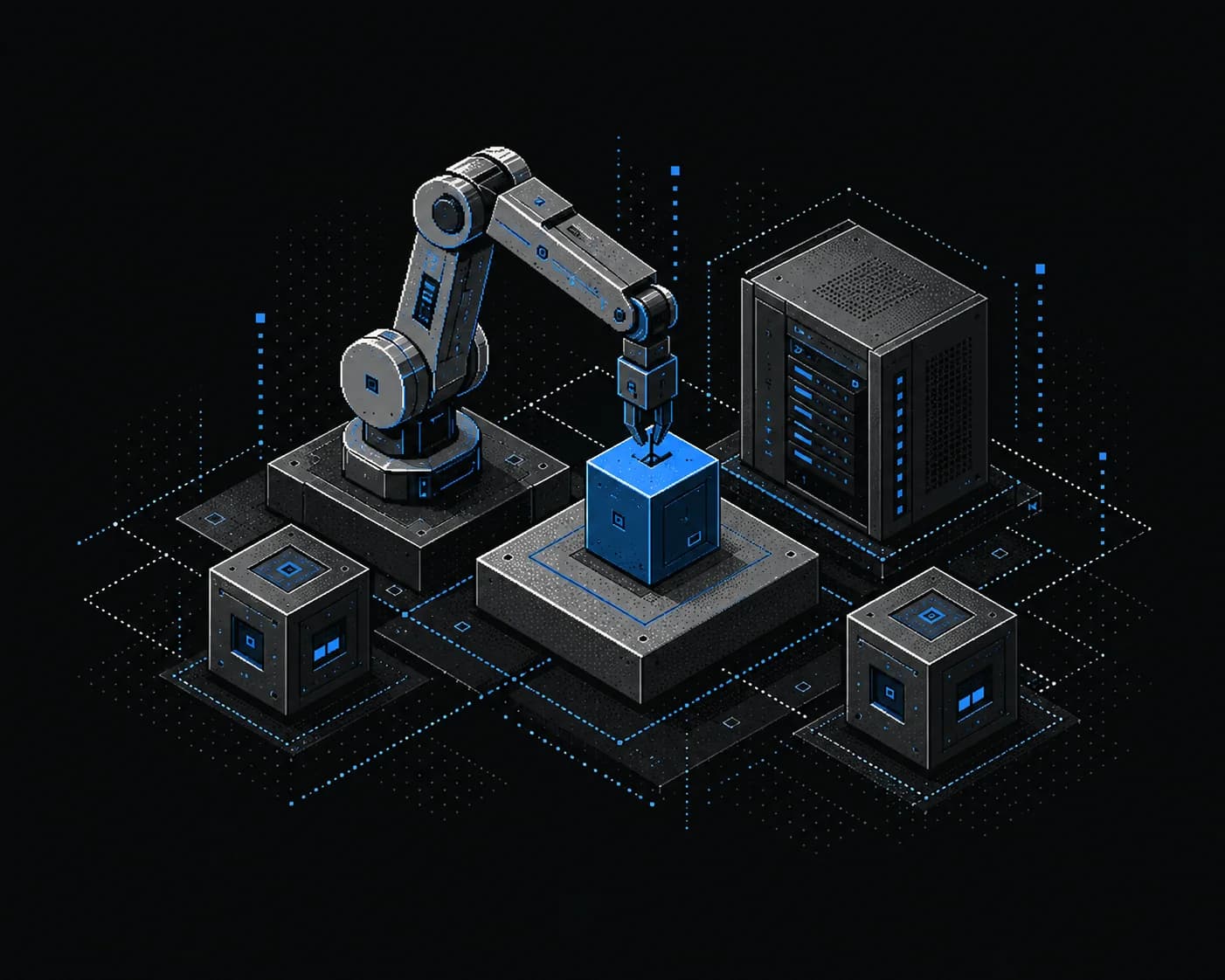
Represent products, machines and scheduling choices in a research simulator inspired by earlier manufacturing research.
Physical AI & robotics
Explore scheduling decisions before changing a production line.
A flexible job-shop simulation exploring product and machine agents, scheduling strategies, reinforcement learning and genetic algorithms.
Explore capabilities
Industrial product teams, manufacturing researchers and operations specialists comparing scheduling approaches.
Represent products, machines and scheduling choices in a research simulator inspired by earlier manufacturing research.
Explore agent-based scheduling and learning or optimisation approaches against a defined simulation scenario.
React and FastAPI surfaces connect the experiment interface to simulation logic rather than live plant control.
These capabilities describe source and research scope. Deployment, integration, security and outcome claims need use-case-specific validation. Concept illustrations are not product screenshots.
Business ↔ technology bridge · Explore scheduling decisions before changing a production line.
A flexible job-shop simulation exploring product and machine agents, scheduling strategies, reinforcement learning and genetic algorithms.
This is a portfolio and source interpretation—not a customer, deployment, certification, or outcome claim.
Industrial product teams, manufacturing researchers and operations specialists comparing scheduling approaches. Explore scheduling decisions before changing a production line.
Represent products, machines and scheduling choices in a research simulator inspired by earlier manufacturing research.
Represent products, machines and scheduling choices in a research simulator inspired by earlier manufacturing research. Explore agent-based scheduling and learning or optimisation approaches against a defined simulation scenario. React and FastAPI surfaces connect the experiment interface to simulation logic rather than live plant control.
Review the experiment against its intended use: Use a representative scenario to frame a scheduling experiment. No deployed scheduler, plant improvement or production control is claimed.
Source evidence
A flexible job-shop research simulator with product and machine agents, scheduling strategies, reinforcement-learning and genetic-algorithm paths, and React/FastAPI interfaces.
Repository evidence is not client, deployment, certification, or outcome evidence.
Use a representative scenario to frame a scheduling experiment. No deployed scheduler, plant improvement or production control is claimed.